Electric · 6 in line
Acoustic · 3 + 3
6th
E2
82.4 Hz
5th
A2
110.0 Hz
4th
E3
164.8 Hz
3rd
A3
220.0 Hz
2nd
C♯4
277.2 Hz
1st
E4
329.6 Hz
Note names won’t tune your guitar.
Knowing the strings should read E A E A C♯ E is the easy half. Landing each frequency — and knowing whether you are nine cents flat or three — is the half that needs an ear or an instrument.
1
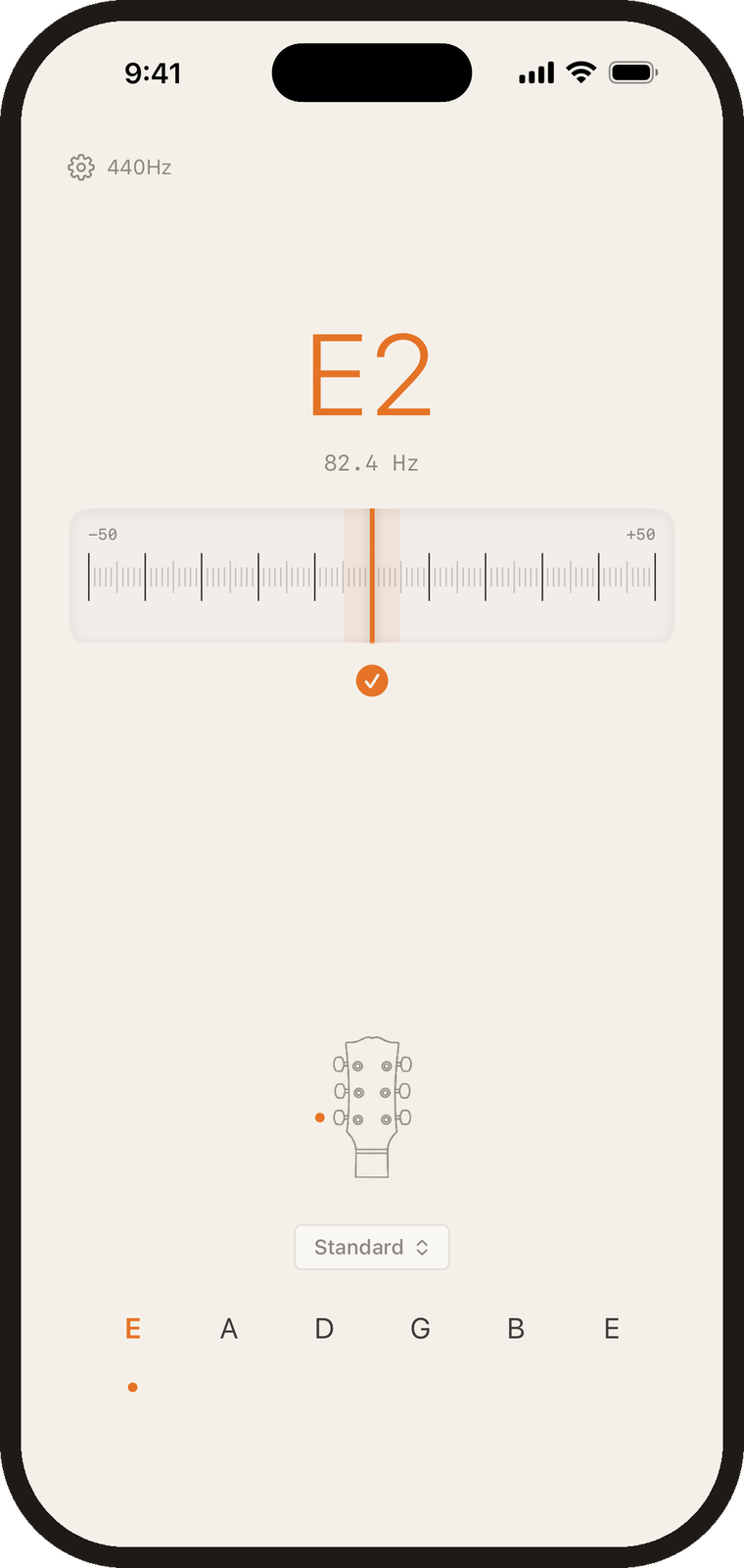
Open Dial and play a string
It listens as soon as you play. Nothing to press.
2
Turn each peg until the needle centres
Three strings tune up: D to E, G to A, and B to C sharp.
3
Check the remaining strings
Changing tension on one string shifts the neck slightly. The rest usually need a nudge.
Get Dial for iPhone
Standard tuning free
Alternate tunings, one-time unlock
Alternate tunings, one-time unlock
What Open A is for
Open G's intervals moved a whole step up, keeping the two outer E strings where they were. Slide players use it for blues in A; like Open E, three strings tune up, so it leans on the neck a little harder.
A few chords to try
A
Open
D
Barre 5th
E
Barre 7th